
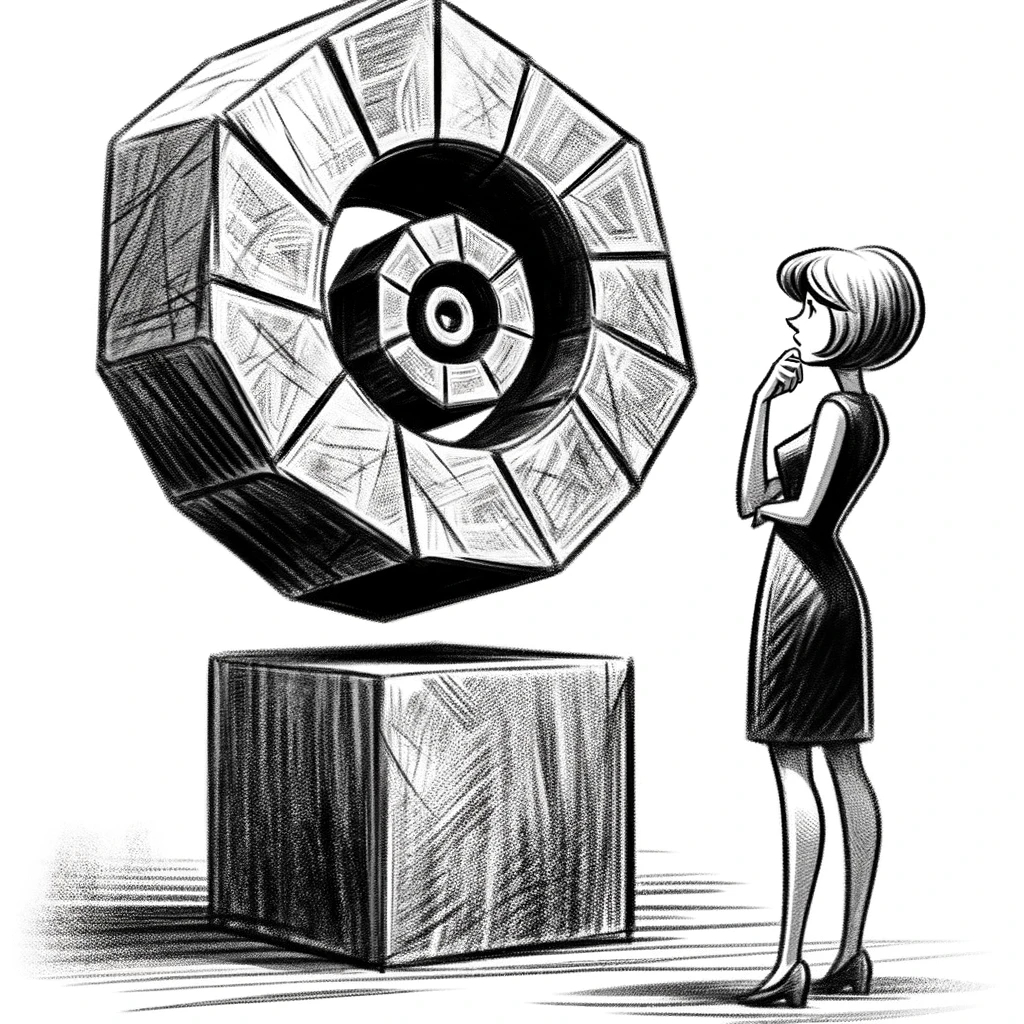
Unintentionally, without noticing, I created two series of poems (three if I have to cluster those depressive, I-wanna-die pieces under one category). The first is about how I explored and finally accepted womanhood in my 30s. The second is about the creative process of making poetry itself.
So, what do they have to do with GPT? Did I make them with AI?
Nah, definitely not. As someone who has made a living from writing and editing for 12 years, this definitely hurts my pride. As a poet-wannabe, this feels like a spit for my already lame existence.
This writing explains the inspiration behind “Just a micro” and why I am willing to pay for a premium GPT (oh, I wish I was sponsored to write this).
First and foremost, I started writing poetry when I was 10. Definitely not out of passion, but because somebody needed to perform a poetry reading for the 6th grader graduation. As a permanent backup school’s MC, this task magically fell for me because the main MC had to guide the entire graduation ceremony. (No matter how many times I changed schools, I was always the alternative, not that I wanted to be one. I hated and still hate speaking publicly. They chose me just because they liked how I sounded)
I hated this idea, but my mom loved it. With her guidance, she suggested I write my own poem to perform—a very simple ABAB poem like what I learned in class. So I did, and I got a lot of applause, and my mom was so proud. “She’s my girl!” she told anyone who would listen.
Then began my short and brief journey as a kid poet/reader. I won some writing/reading school or local competitions during my three years in that town. I didn’t even know how I managed to do it.
I left this all behind when we moved town because it was never my passion. My dream has remained the same since I was a grader to a college student: become a journalist.
That was a dream come true. I got accepted at my first choice of newspaper, a very prestigious one, right after I graduated college. But everything wasn’t all rainbows and butterflies; reality was harsh. That was when I first wrote my English poem to channel my frustrations.
And out of nowhere, the urge to write something that is not news, something ambiguous, rose again — this, perhaps, the era when I began to struggle with mental illnesses.
Among the effects I got from writing poems is the medium to understand myself and as a form of therapy. I am a human full of contradictions. My therapist declared I am a highly sensitive person (HSP), but at the same time, pseudo-science-wise, I am an INTx. Simply put, I am overwhelmed by emotions but have difficulties knowing what I feel and managing them.
Millennials, remember when we were kids, there were so many ads about “balancing your kids left and right brain”? Tell you what, it’s a fraud. I mean, yes, whatever techniques they introduced might work; my mother practiced them when I was still a lump of flesh in her womb. And, ta-da, those psychologist/career consultants announced when I was about to choose what study I should pursue in college: I have a balanced left and right brain. Is that good? Nope. Those with balanced brains usually struggle to make decisions and are prone to mental health challenges. Screw those ads.
But poetry helps me understand and navigate myself.
The thing is, having been raised by “the biggest English daily in Indonesia” for half of my professional life has robbed my instinct to write in my native language. That is why most of my poems are in English. The kind of English poems I knew were only those popular online, made by influencer poets, often found when I was scrolling Pinterest trying to find motivational quotes or self-help therapy.
Of course, this breeds insecurities. Do I write them correctly? Is the spacing awkward? Does it sound natural for native speakers? Do I even have the skills needed?
On the other hand, I decided to subscribe to premium Chat GPT because I needed to brainstorm about a venture I just initiated. I needed certain input and visual imagery, from its logo to its website.
But boy, I enjoy it more than I should. I started playing with their astrological chart (not that I believe them, but hey, I am a Scorpio sun, a water sign, with rising and moon in Leo, a fire sign! Yay, another contradiction), personality labs (a sage and creator; they couldn’t decide one), and started putting my poems on DALL-E to see what kind of images it generates, and I love it.
Then I stumbled upon some other extensions: Poetry and Creative Writing Coach. This could be good; I could learn a lot from it.
That’s what I thought.
I began uploading my poetry compilation manuscript for them to assess and score and suggest improvements. The results?
A headache.
All my poems are “beautifully, poignantly, captivatingly captured” but “will benefit from enrichment.” Following their guidelines could raise my score.
What should I do to improve? Tighten the structure. Okay, I understand this one. But add vivid imagery and sensory details like how the food tastes blah blah, need to work on rhythm, meter, alliteration, anaphora, parallelism, etc., make a conclusion with the resolution, enrich vocabularies, yada yada?
Hey, some of them are designed to be micro. Why do I have to lengthen it with details that will only blur its messages beyond understanding? Why do I have to end my poem with a conclusion and resolution when the poem itself is about confusion? And why do they have to be positive when I am clearly expressing skepticism?
When they said I needed to enrich the vocabulary and I asked for examples, they changed my wording to sophisticated words that are definitely NOT my style. And while synonymous, they are not necessarily on point. Also, why do I have to use words that are inaccessible to everyone? I have a lengthy post here in this blog about how people often choose to write with fancy words to show off their brain capacity, while one’s intelligence actually shines when they can explain complex issues in simple words.
And what the heck is meter, alliteration, whatever? They didn’t teach us in our English class. What we were taught is just what we would need to secure jobs that these days require us to be able to speak and write in English.
I am not even sure whether the poems I read in books I bought actually follow these strict rules. But, well, I guess the literary world is almost the same everywhere. Here, we have modern poems from rebel poets who refuse to adhere to these standards.
When it comes to the need to express myself, I, too, refuse to confine myself to rigid borders. Call me unlearned; I want to stay unapologetic with my poems/trash/whatchamacallit. Because if not, what is the point of writing them down anyway?
What’s funny is when I got really pissed off after all the poems in the manuscript were assessed in similar manners, and I told this artificial intelligence that “I want to maintain my simplistic style”, “I don’t care about meters”, “I don’t want a conclusion, I make this verse because I question everything”, “No, I don’t want to give a positive resolution because I don’t believe them”, they changed their assessment to “modern, free-verse micro poetry” and boosted my score to 9.5 or 10. What. The. Heck.
So, I made up my mind that I would abandon these coaches and express myself freely. That is why I wrote that “Just a micro” piece: I believe whatever this AI said reflects the mind of the community, the humans who trained it.
But I won’t let go of my premium GPT, and here’s why, in case any of you wonder whether you should make a purchase or not:
- They replace Google. Rather than Googling, I chose to ask GPT instead because Google’s algorithm is getting even fishier. Ads pop up first, and others on the first page are articles exploiting its SEO that don’t even answer your question. Also, GPT summarizes it well, so I don’t have to open many windows simultaneously.
- They help with my job. A lot. Given that I now work in a media that popularizes scientific articles, and each statement requires sources, and sometimes, my authors miss adding them, OpenAI’s scholarly extensions help me navigate research or sources that I could quote to back up the statement. Also, given that I have to deal with a variety of subjects, I can learn quickly with their summary so I can edit with prior knowledge and be more critical of the pieces I am working on.
- I am too lazy to write an email. For this, I allow GPT to write for me.
- It helps me when I try to remember silly things like, “hey, you know that phrase to explain this phenomenon, I think it has the word storm or something” or something like, “hey, what do you call prolonged economic slowdown?”
- I ask for advice. LOL. Mostly about how to speak with other humans. Or interior design, like the colors that go well with this sofa I bought. Or just whatever stuff I am too lazy to think of myself. I feel like I have someone to brainstorm with who is available anytime.
- I love how I can visualize my wild imagination with DALL-E. I always wish I could draw. I draw sometimes. I have an expensive brand of watercolors. I don’t have the ability and talents, though. BUT this virtual image creator is exclusively for petty things like creating my desktop wallpapers, visualizing my poems, or creating avatars that I have no budget for. I have many illustrator friends, and I respect their works (which are, of course, better than DALL-E). I will definitely opt to use their services for commercial and professional purposes. I myself am a writer, and it’s sad that my job is getting replaced by AI.
Yep. So that’s my rant and today’s reflection: express yourself freely, but don’t be afraid of technology. Exploit them to empower you.
 Paracosmic
Leave a comment